

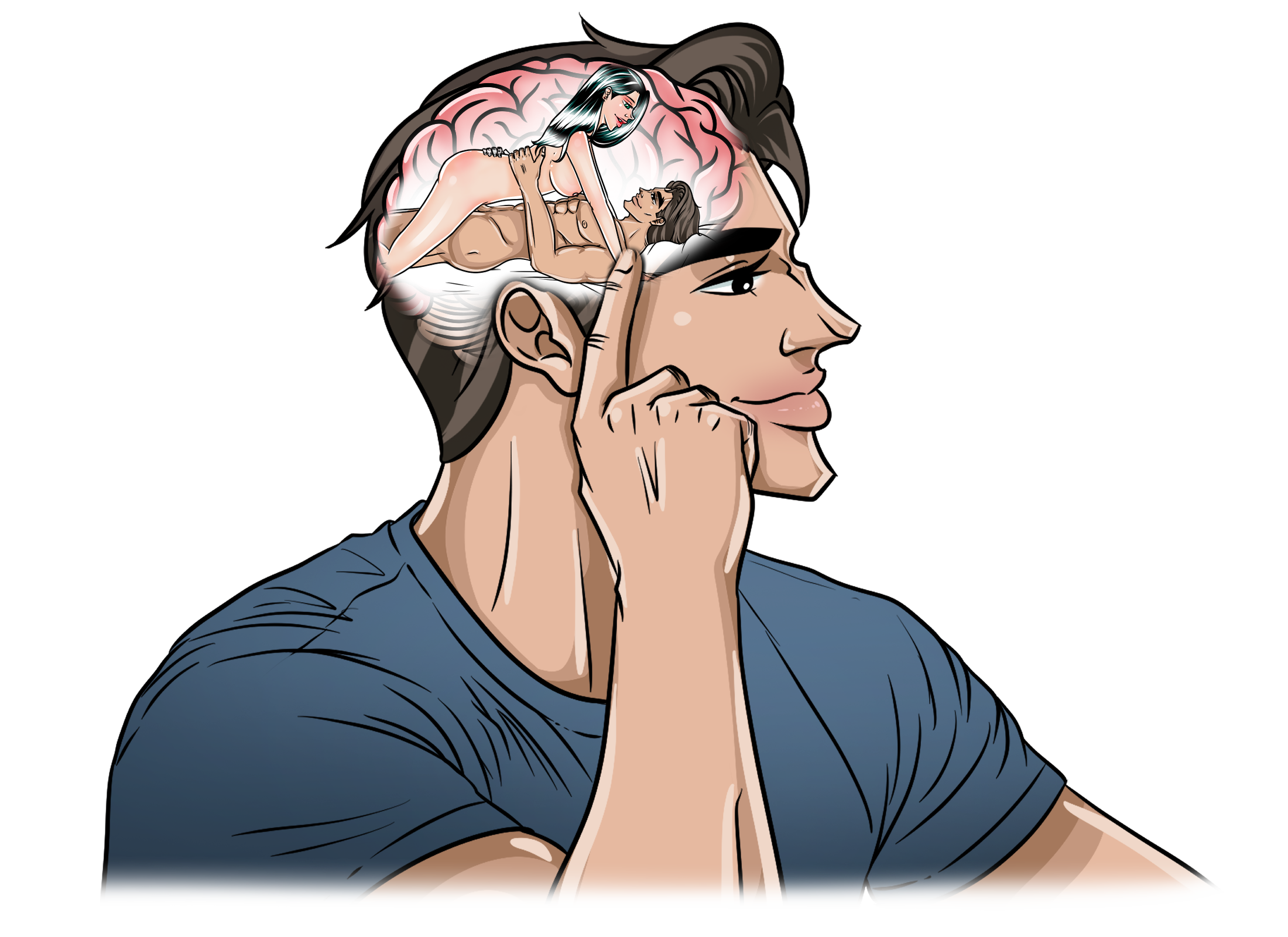

Hypersexual meaning isn’t “high sex drive,” mate. It’s when the sexual urge starts running your life. Studies estimate 3–6% of people struggle with compulsive sexual behavior, mostly men. So if desire is starting to mess with your work, sleep, relationship, or sanity, keep reading. This is where we clean it up.
In this article, we'll cover:
What Is Compulsive Sexual Behavior Disorder? (Hypersexual Meaning Explained)
Hypersexuality, also referred to as Compulsive Sexual Behavior, means having sexual urges, thoughts, or behaviors that feel hard to control and start interfering with daily life. Hypersexuality is when the urge feels compulsive, repetitive, or disruptive, especially when it affects your relationship, work, sleep, mental health, or self-control.
Now, before you panic, let’s clear up the difference between being hypersexual and just having a naturally high sex drive.
Difference Between Hypersexual & High Sex Drive
If you don't take my word for it, below are the actual definitions according to science, so you know where the line really is.
The Real Hypersexual Meaning According To Science

Here’s what the men in lab coats say hypersexual actually means, minus the boring medical fog.
Hypersexuality Is Losing Control Over Repeated Sexual Urges
Hypersexuality is not about being horny all the time. It’s when those urges run you instead of you running them. According to the World Health Organization’s ICD-11, the key marker is loss of control over sexual behavior for 6+ months, leading to real-life consequences.
Hypersexuality Is When Sex Starts Hijacking Your Life
The Mayo Clinic explains it’s when sex starts hijacking your health, relationships, or work. It’s about sex becoming so obsessive that it wrecks the rest of your life.
Hypersexuality Is When You Keep Going Even After Negative Consequences
One Frontiers In Psychiatry study showed 94% of men with compulsive sexual behavior said they couldn’t stop, and 85% kept going even after serious negative consequences. That’s the big red flag, mate.
Hypersexuality Can Be Functional Or Destructive
A Perrotta (2023) clinical review says some guys are “functional” hypersexuals, still holding life together, while others spiral into dysfunction. Causes can range from brain chemistry to trauma to substance use. Same pattern, different level of damage.
What hypersexuality means boils down to crossing the line; you’re caught in a loop of sexual compulsivity and sexual impulsivity that keeps pulling you back in. And that, brother, is a mental illness that needs real attention.
Now that we’ve drawn the line about hypersexual meaning, let’s look at how common hypersexuality actually is, and why more men struggle with it than you’d think.
How Common Is Hypersexuality?
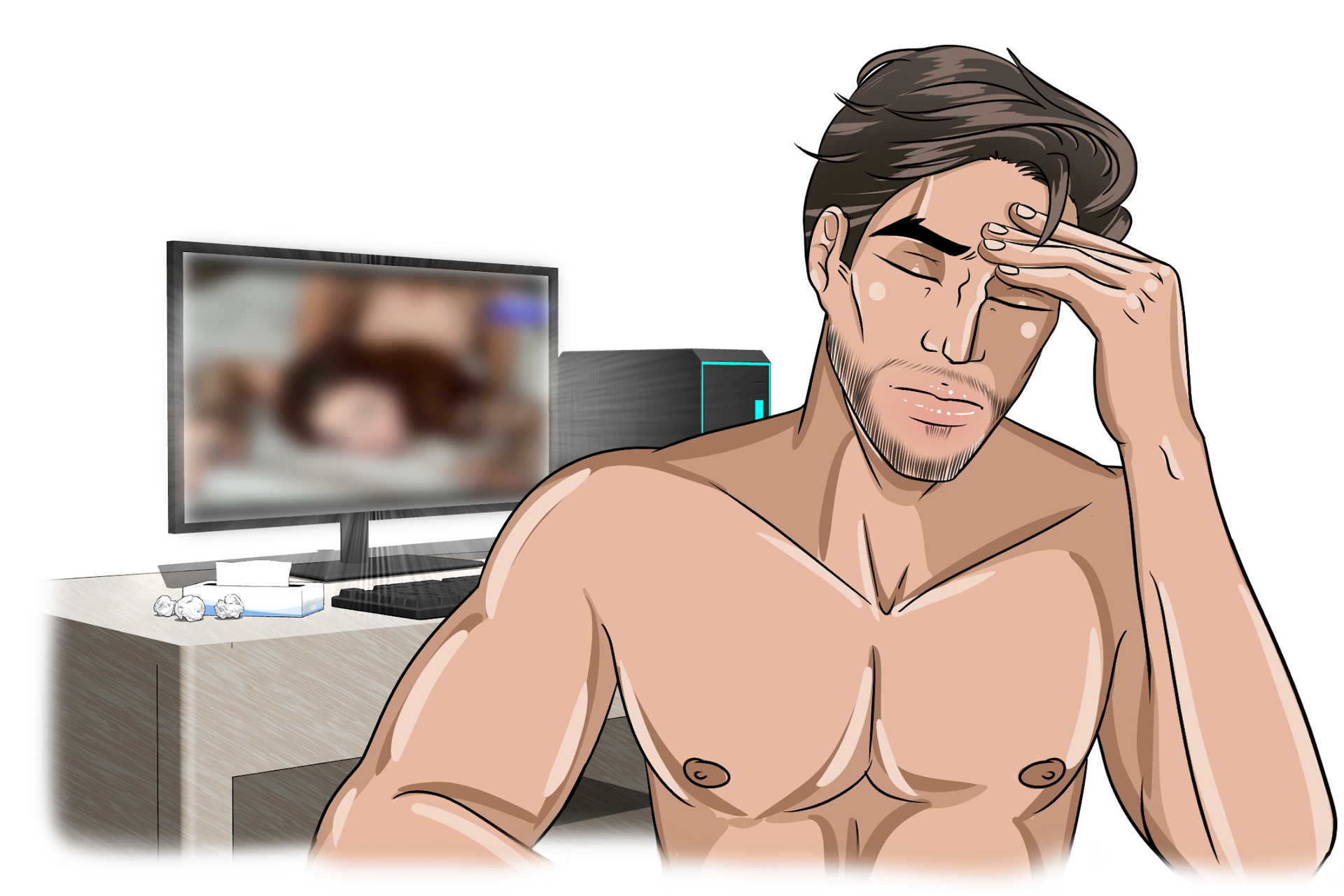
You’re probably wondering, "Am I the only one dealing with this?" Nope. The numbers show it’s more common than most guys think.
Hypersexuality doesn’t strike everyone, but it’s not rare either. Men tend to report it more, but it shows up across genders and age groups. Next up: let’s run through the signs and symptoms of hypersexuality.
What Does A Hypersexual Person Do? (Signs & Symptoms Of Hypersexuality)
.png "What Does A Hypersexual Person Do? (Signs & Symptoms Of Hypersexuality)")
So how do you know if you’ve crossed the line from a strong sex drive into problematic sexual behavior? Here are the biggest signs you're hypersexual.
Sign #1 – You Masturbate Too Much, Even In Wrong Places
Masturbation becomes a problem when you’re sneaking it into places where it clearly doesn’t belong. If bathrooms, work breaks, or risky moments become your “release zone,” your impulse control needs attention.
Sign #2 – You Watch Porn For Hours & Cannot Stop
Porn becomes a red flag when “just one video” turns into two hours and a dead afternoon. That dopamine hit keeps pulling you back, even when your brain knows you’ve had enough.
Sign #3 – You Have Sex With Many Random People Often
Multiple sexual partners don’t automatically mean something is wrong. The problem starts when frequent sexual encounters feel rushed, unsafe, or impossible to slow down.
Sign #4 – You Pay For Sex With Prostitutes Or Massage Parlors
Paying for sex becomes a warning sign when you keep doing it even after it hurts your money, relationship, or self-respect. That’s not just seeking sexual pleasure, mate, that’s the urge driving the car.
Sign #5 – You Spend Too Much Time On Phone Sex Or Sexting
Sexting becomes a problem when your phone starts running your sex and love life. If messages, photos, or phone sex keep stealing your focus, that tiny screen has way too much power.
Sign #6 – You Go To Strip Clubs Or Sex Clubs Too Often
Strip clubs and sex clubs become a concern when you keep going even after promising yourself you’ll stop. Fun has turned into sexual impulses calling the shots.
Sign #7 – You Use Sex To Feel Better When You Are Sad Or Stressed
Sexual activities become risky when they turn into your emotional painkiller. If stress, loneliness, or sadness always ends in porn, sex, or masturbation, you’re not healing, you’re escaping.
Sign #8 – You Stop Taking Care Of Your Job Or Family Because Of Sex
Problematic hypersexuality shows up clearly when work, family, bills, sleep, or basic life stuff starts losing to sex. Real life should not be getting benched by your sexual drive.
Sign #9 – You Keep Doing It Even After You Swore You’d Stop & It’s Hurting You
Trying to stop and failing over and over is one of the biggest red flags. Even the American Psychiatric Association and the statistical manual of mental disorders look closely at loss of control when behavior becomes harmful. If it costs you peace, trust, health, or respect, and you still can’t stop, that matters.
Sign #10 – You Feel Empty After Sex But You Still Do It
Sex should not leave you feeling hollow, guilty, or disgusted with yourself every time. That crash can show up with addiction, sex addiction, sexual trauma, bipolar disorder, or borderline personality disorder.
Sign #11 – This Has Been Going On For Six Months Or More
A messy week is one thing. A six-month pattern of losing control lines up with how the World Health Organization describes compulsive sexual behavior disorder in the International Classification of Diseases.
Sign #12 – Your Sex Life Causes You Big Problems Or Stress
Your sex life has crossed a line when it keeps bringing stress, shame, fights, fear, or damage. Cleveland Clinic discusses symptoms and causes this way because the real issue is how much they disrupt your life.
Sign #13 – You Need More Sex Or Riskier Sex To Feel Satisfied
Your brain starts chasing bigger hits when normal sexual pleasure stops feeling like enough. That’s dopamine moving the goalpost, and yes, it’s a sneaky little bastard.
Sign #14 – You Get Angry Or Annoyed When You Try To Stop
Getting snappy, restless, or moody when you try to stop shows your body is used to the release cycle. That’s where addiction recovery tools start to matter.
Sign #15 – You Hide Your Sexual Behavior From People You Love
Secrecy is a loud warning bell. Sexual addiction screening tools and the sexual compulsivity scale often look at hiding because it usually means shame and loss of control are already involved.
Sign #16 – Sex Has Cost You A Relationship, Job, Or Money
Sex has crossed the line when it starts costing you the big stuff, like your partner, income, savings, or work stability. That is not “high libido,” mate, that is real-life damage, and it’s one of the clearest warning signs of hypersexuality.
Sign #17 – Sex Feels Like A Need, Not Something You Want For Fun
Sexual desire becomes heavier when it stops feeling fun and starts feeling urgent. That shift is one of the characteristics of hypersexuality in patients because the urge feels less like a choice and more like pressure.
Sign #18 – You Do Many Sexual Things At Once To Get More Feeling
Stacking porn, sexting, hookups, masturbation, and risky sexual activities just to feel something is an overload. That pattern can point to a sexual disorder, especially when one thing alone no longer gives you enough sexual arousal.
If these signs hit, it’s a blueprint of hypersexuality, meaning you’re stuck in compulsive loops. This condition predominantly affects men, but anyone can get trapped. It’s a serious issue linked to mental health conditions, affective disorders, and other mental health problems.
If you’re nodding at even one of these, you’ve got to treat this as more than a hobby gone wild. It’s time to act.
Andrew’s Expert Tips On How To Control Hypersexuality

You can’t white-knuckle your way out of sexual addiction or problematic sexual behavior. Willpower alone won’t cut it. What works is stacking small, deliberate actions that retrain your brain and body. Here’s what you can do, based on how I coach men through it.
Tip #1 – Track What Sets You Off (So You Can Actually Defuse It)
Most guys don’t relapse out of nowhere, mate. They relapse because they don’t know their triggers
Do This
Tip #2 – Interrupt The Pattern With Small, Physical Shifts
When the urge hits, don’t sit there marinating in it. Move your body. Hypersexuality is a persistent pattern, and you break patterns by snapping out of them.
Do This
Tip #3 – Build A Daily Structure That Keeps You Engaged
Chaos feeds hypersexuality. Structure starves it. Idle time = urges.
Do This
Tip #4 – Talk To Someone Who Gets It (So You’re Not Battling Alone)
Hypersexuality is isolating, but healing isn’t. Group therapy, commitment therapy, and CBT are all used to treat this condition effectively.
Do This
Tip #5 - Stop Using Shame As A Treatment Plan
The old terms "nymphomania" and "satyriasis" made people sound broken or dirty. Shame does not fix hypersexuality. It usually makes the loop worse because you feel bad, hide more, and then use sex or porn to escape feeling bad.
Do This
Tip #6 - Check For Mental Health Or Brain-Based Causes
Hypersexuality can show up with dementia, bipolar symptoms, trauma, or disease following dopaminergic therapy. Translation: sometimes the sex drive has a medical engine underneath.
Do This
Tip #7 - Use The 10-10-10 Rule Before You Act
Hypersexual urges shrink your brain down to “right now.” The 10-10-10 rule pulls you back into adult mode before your impulse spends your future.
Do This
You’re retraining your brain here. It’s not a one-night fix, but these tips will start carving out space between you and your impulses. With the proper daily structure, support, and tools, you can break out of the loop, rebuild control, and finally enjoy sex without it destroying your life.
Before we wrap this up, let’s answer the questions most guys quietly Google at 1 a.m. with one hand on their phone and the other on their dignity.
Frequently Asked Questions
Let’s answer the most common questions men ask about hypersexuality with some sexologist-backed answers you can trust.
Hypersexuality is not “cured” like a flu, mate. It’s managed and treated by rebuilding impulse control, reducing repetitive sexual habits, and getting support for triggers like trauma, bipolar disorder, or compulsive masturbation.
Hypersexual behavior can wreck intimacy because the partner starts feeling replaced by porn, secrecy, sexual encounters, or constant pressure for sex. It turns sex and love into stress instead of connection.
Ask yourself this, brother: do your sexual impulses make you feel ashamed, out of control, or scared of what you’ll do next? If yes, that distress matters, and it’s one of the big signs experts look at.
The World Health Organization classifies compulsive sexual behaviour disorder under impulse control disorders in the International Classification of Diseases. The Diagnostic and Statistical Manual does not list it as its own diagnosis.
Yes, when it becomes compulsive, repetitive sexual behavior that causes real damage. It’s not about sexual orientation or simply having a strong sexual desire; it’s about loss of control.
Not exactly. Sex addiction frames the problem like an addiction to sexual reward, while hypersexuality or compulsive sexual behavior focuses more on loss of control, distress, and real-life damage. The clinical focus on hypersexuality is on urges and behaviors that feel uncontrollable and harm health, work, or relationships.
Yes. Hypersexuality can show up through compulsive masturbation, risky sexual encounters, constant sexual fantasies, paying for sex, or chasing sexual arousal without porn at all.
Sometimes urges calm down when stress drops, but true problematic hypersexuality usually needs structure, therapy, and support. Waiting it out is a bad plan if it’s hurting your relationship, health, money, or safety.
Ready to take your skills to the next level? Join our exclusive online course “Squirting Triggers” and gain in-depth knowledge with expert guidance, easy-to-follow step-by-step explanations, live demonstrations, and two female perspectives. Don’t just read about it – master it! Enroll today and start transforming your life. Get started Now!